The 1920s Were Really Roaring Up on Motorcycle Hill
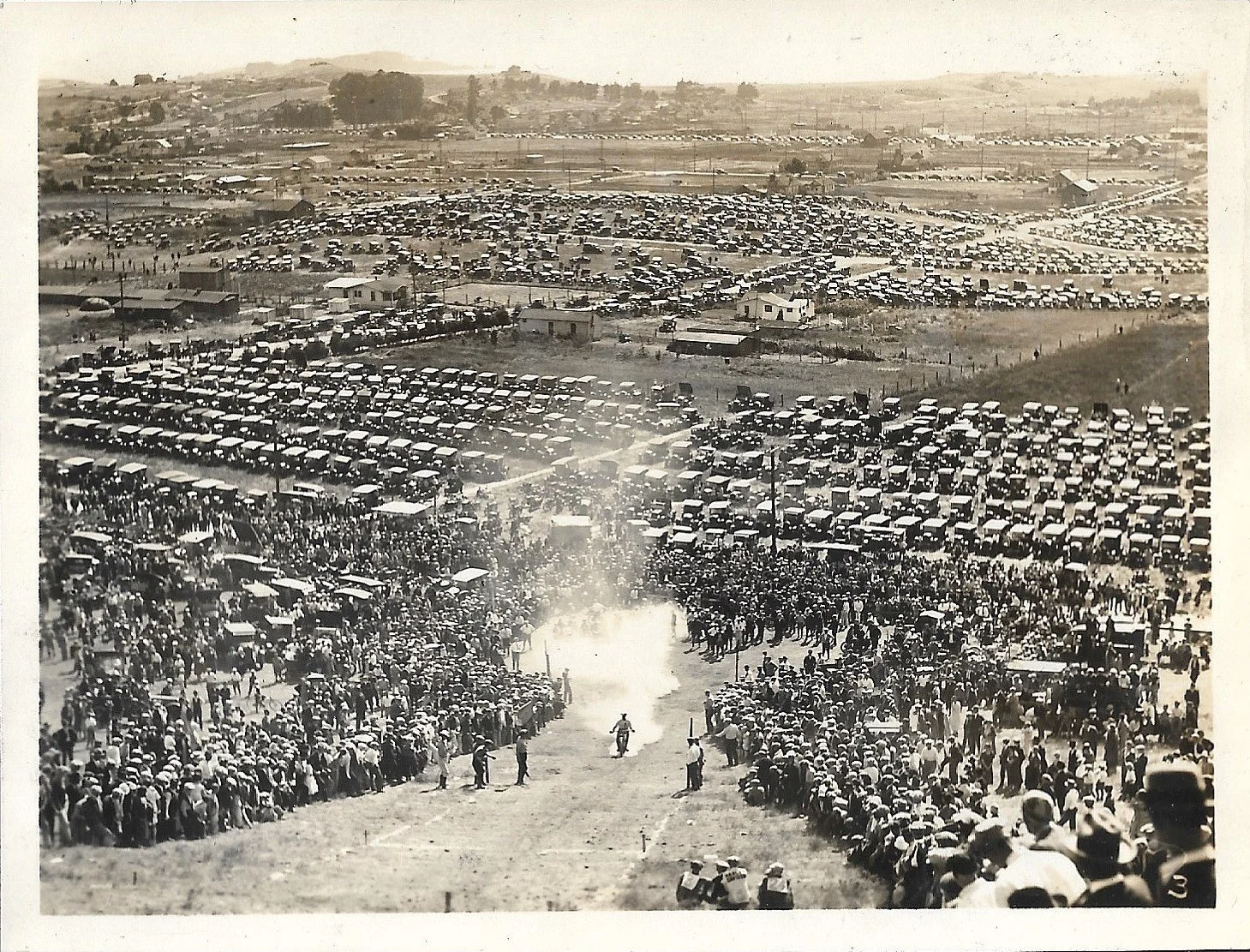
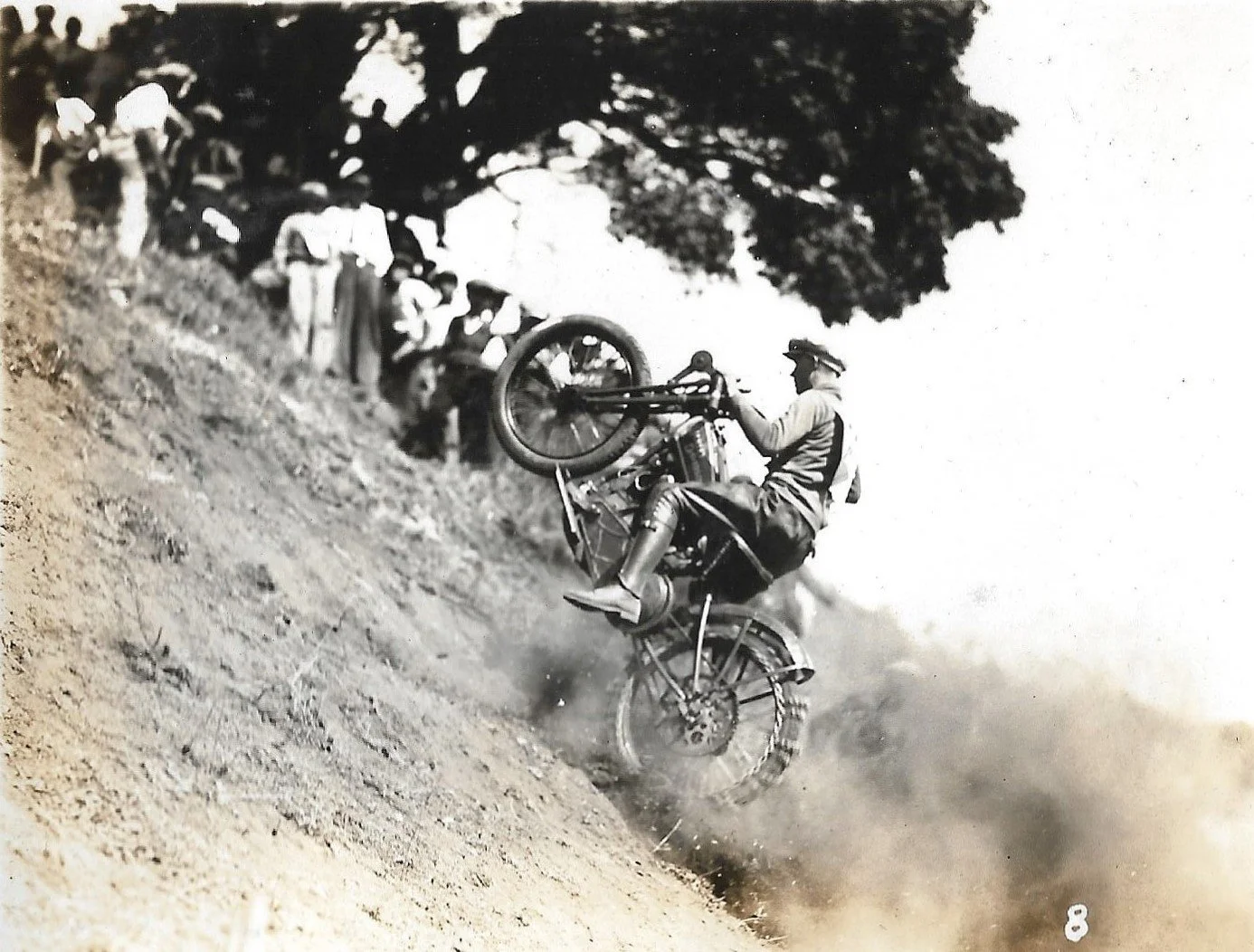
Spectators crowd the track as a motorcyclist challenges the steep rutted course hoping to conquer Motorcycle Hill. Photo courtesy of the Caya family, EC Historical Society collection.
By Jon Bashor
This article first appeared in June 2026 edition of The Forge
Between 1920 and 1930, El Cerrito’s population officially grew from 1,505 to 3,790. But on weekends when championship motorcycle racers came to town, the population often ballooned to 10,000, or even 100,000, according to one newspaper article of the time.
They came to town to watch the riders as they roared up a deeply rutted track on a rise then known as Peralta Hill. Today, the site is called Motorcycle Hill.
Climbing up the hill from Blake Street today provides a westward view of El Cerrito streets lined with homes and trees and dotted with schools and businesses. One hundred years ago, the hills were largely treeless and the view below included farmland, a few homes, dirt roads and not much else.
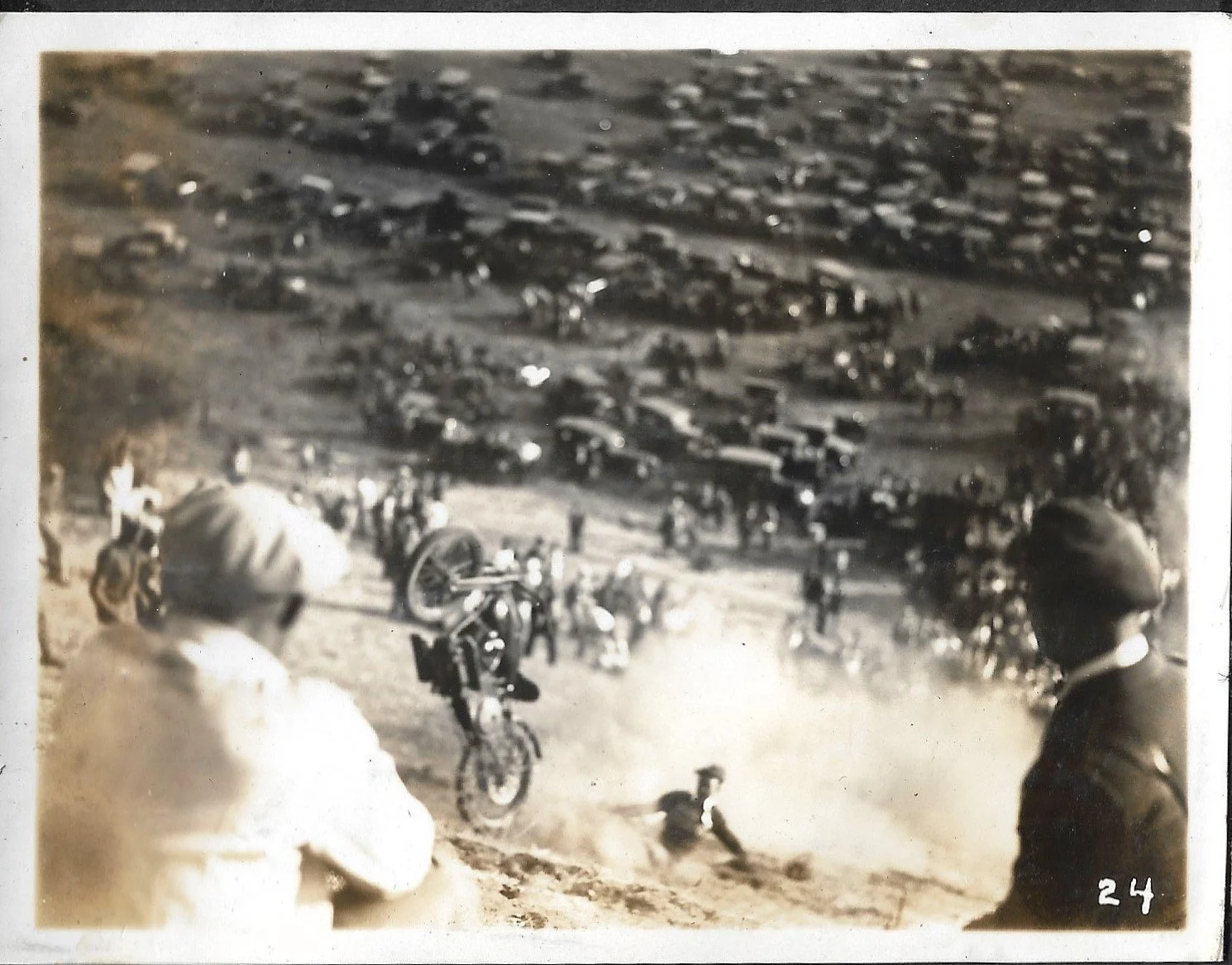
Except on the days when regional and national hill climb contests were held. On those days, the open land was packed with hundreds and hundreds of cars parked every which way for almost as far as the eye could see. From around the East Bay and beyond, spectators came to crowd the sides of a chalk-lined path and watch as some of the best-known motorcyclists in the country came to try their hand at surmounting the hill on their Harley-Davidsons and Indians. One undated article recommended “Take Golden Gate Ferry Foot of Hyde Street.”
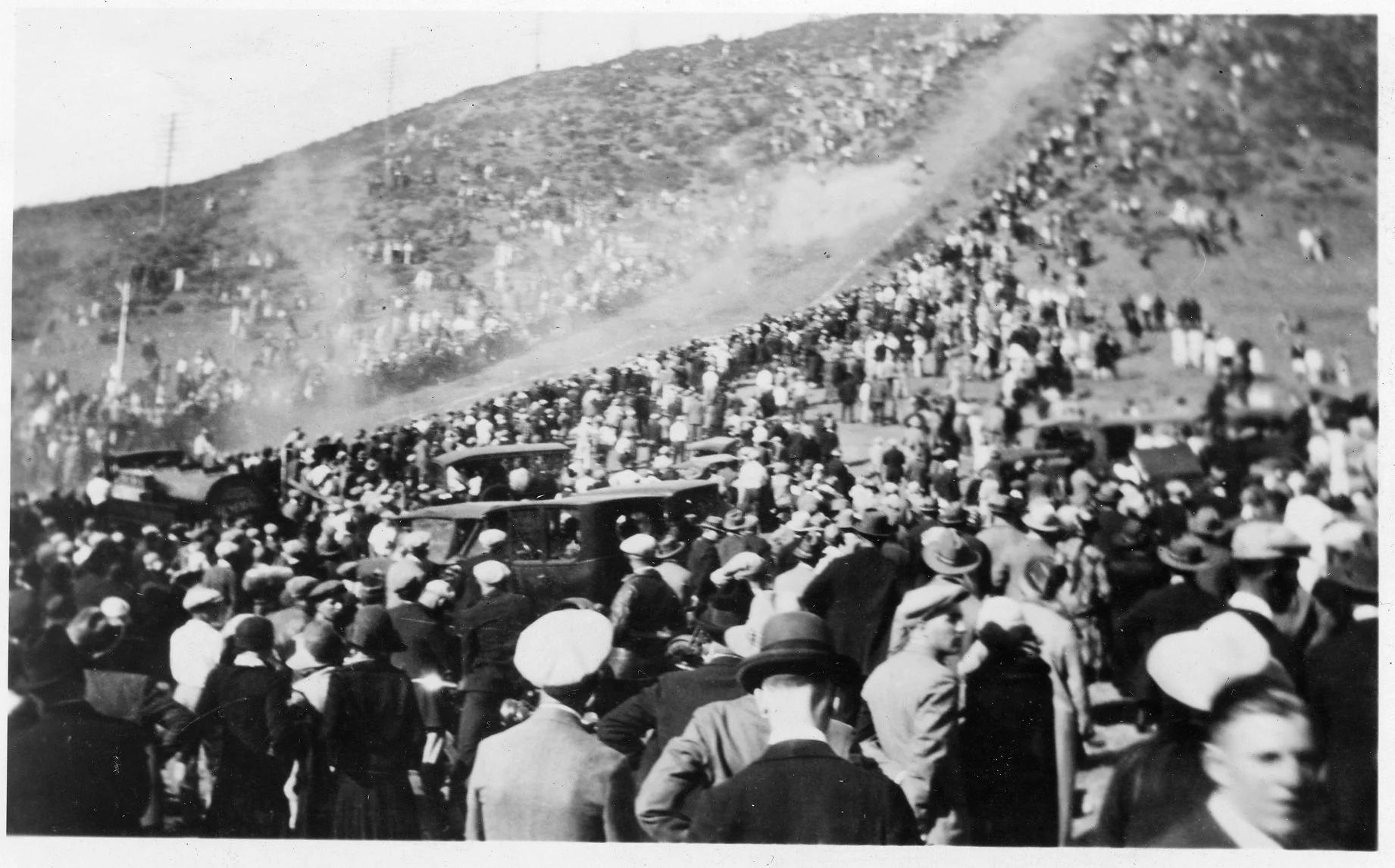
Thousands of people turned out for the hill climb competitions on Motorcycle Hill in the 1920s-30s. El Cerrito Historical Society Collection
In an Oakland Tribune article setting the stage for the seventh annual run in September 1925, the reporter wrote “The hill-climb of 1924 brought over 100,000 sport fans to cheer the slant-shooters, in what was probably the most thrilling competition ever seen in the Eastbay, 37 ‘aces of the grades’ fighting for first place and the famous Skyline Cup, engraved only with the names of those who have topped the 82 per cent gradient three or more times, at better than 40 miles an hour.”
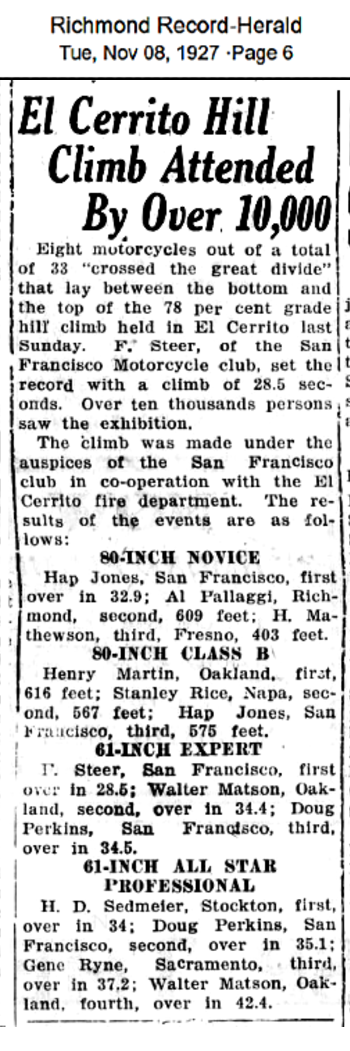
Article courtesy of Roxy Article Miraválle
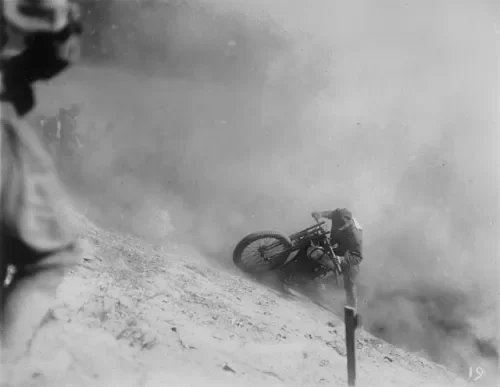
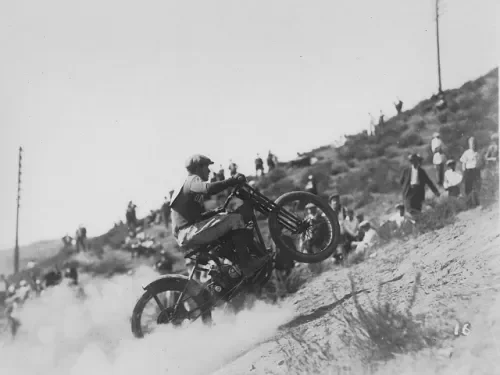
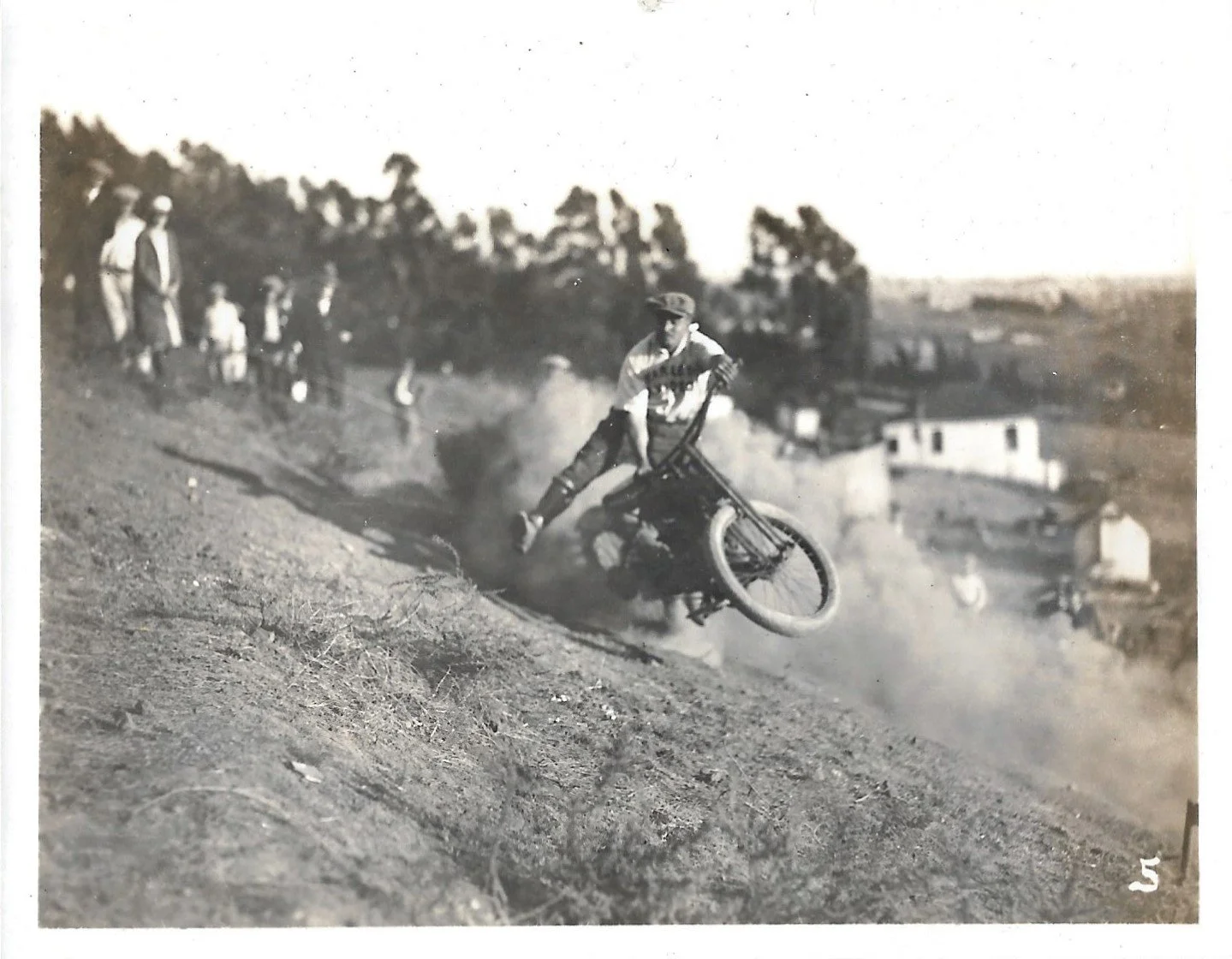
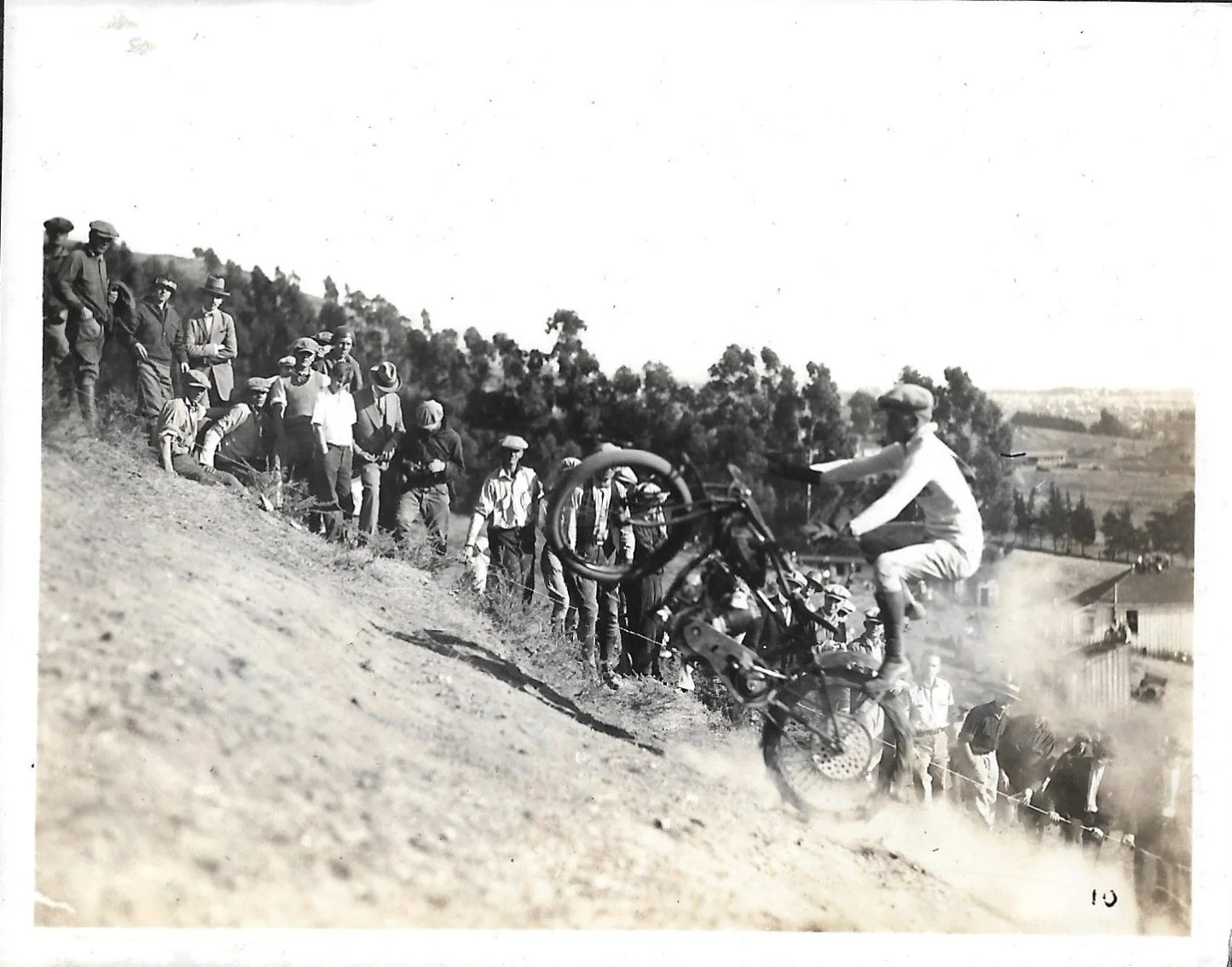
The “track” was a rutted trail of soft dirt stretching from 650 to 700 feet up a steep grade. Many riders fell far short – literally. Photos in the El Cerrito Historical Society show riders falling to their right, to their left, or to the rear as their cycles roared uphill without them. A video from the 1931 championship event shows cyclists jumping off as their bikes peeled out from underneath them; the cycles’ tires spinning wildly and equipped with chains to try to improve traction.
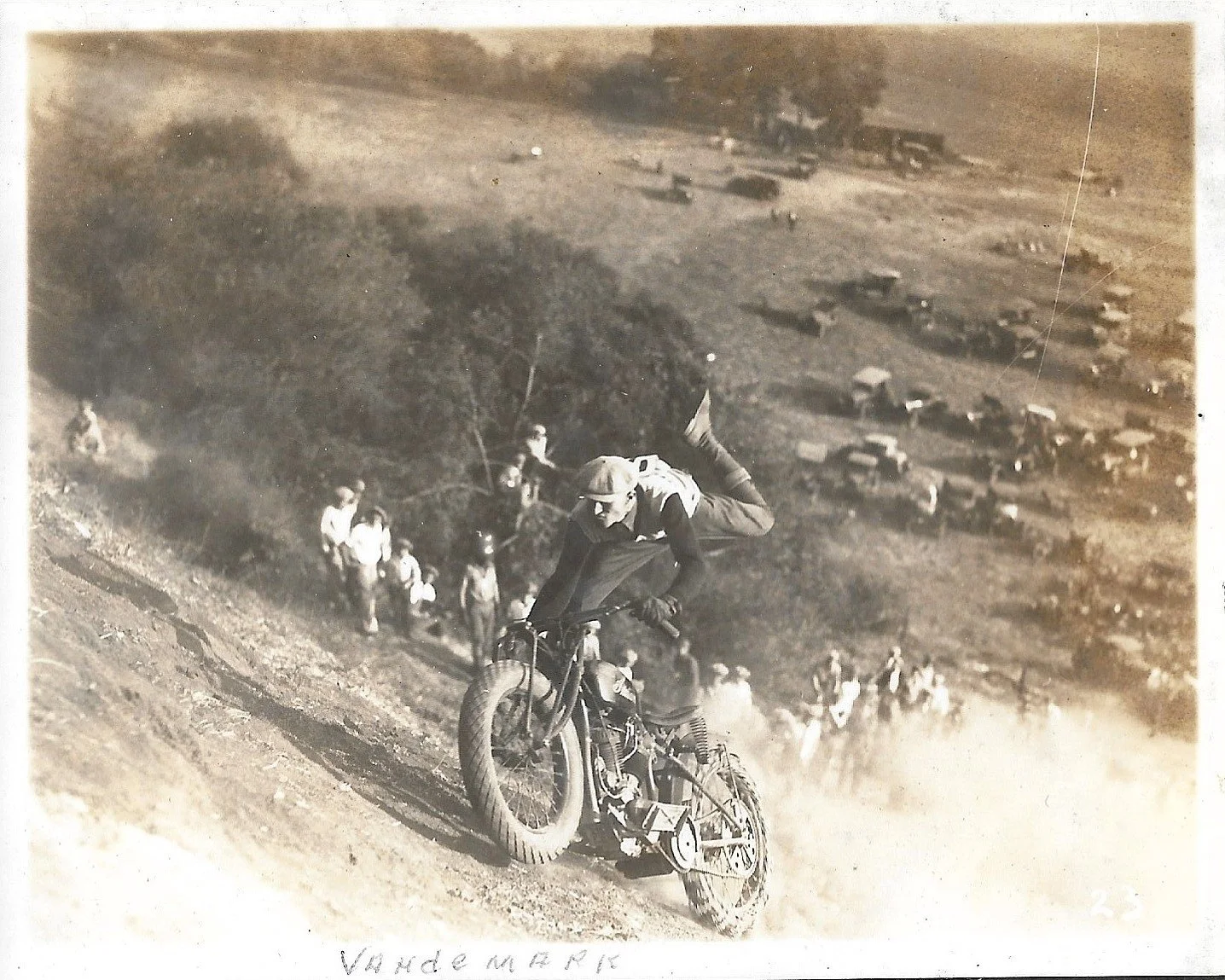
With chains on his rear tire, Les Van Demark puts his whole body into it as he pilots his Indian motorcycle up Motorcycle Hill. Photo courtesy the Caya family/ EC Historical Society collection
Not an exact science
A number of newspaper clippings about the climb tell the same broad story of exciting action, but the details differ. Local historian Mervin Belfils noted that “This hill where the Oakland Motorcycle Club held their meets was often referred to as Peralta Hill, but later usually referred to as Thulin Hill.” The Oakland Tribune story cited above refers to it as Cerrito Hill. Today, it’s known as Motorcycle Hill.
And Belfils wrote that “The steepest part of the hill climb course had an average 74% grade with cuts and ruts one to two feet deep in places. The course was rough and steep. The record time for the 650-foot climb was 27-1/5 seconds from start to going over the top to the finish line.”
An Aug. 5, 1928 story from the San Francisco Examiner stated “The hill is 700 feet long with a maximum grade of 80 percent,” adding that the record time of 27 seconds was held by Soapy Sudmeier.
On Nov. 8, 1927, the Richmond Record-Herald reported that “Over ten thousands persons” saw F. Steer of the San Francisco Motorcycle Club set a record of 28.5 seconds climbing the 78 per cent grade.
But the overall effect was the same as the course consisted of “ruts two and three feet deep which bounce the contestants around like corks on a stormy sea,” the Oakland Tribune reported on Sept. 30, 1928.
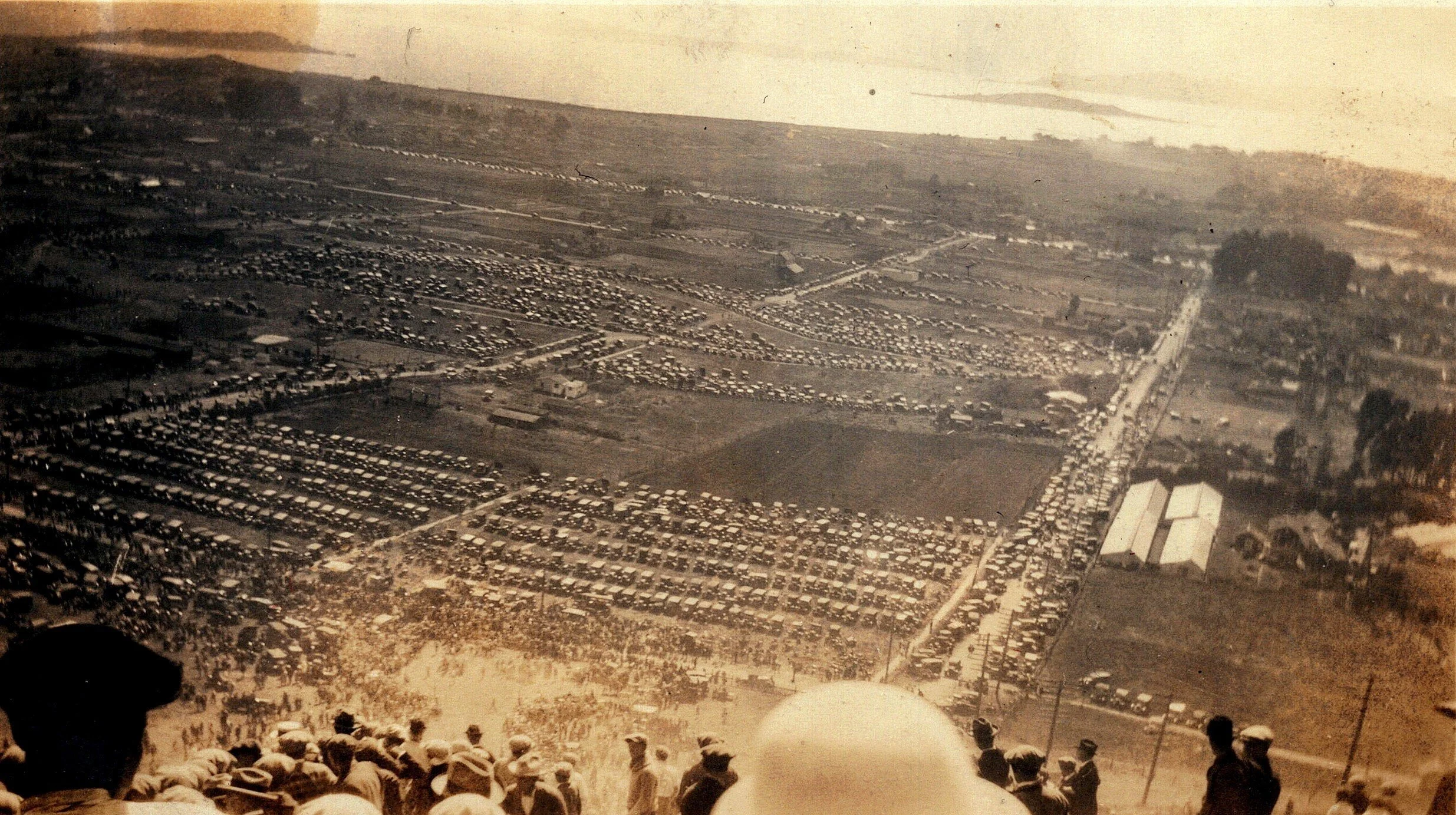
Both automobiles and spectators crowded around Motorcycle Hill on days when hill climb contests were held. El Cerrito Historical Society collection
Official support for the events
To ensure good communication at the track, “The Headquarters Battery, 43d Field Artillery of the National Guards, have wired the hill for complete telephone service, a local switchboard being installed…” the Tribune noted in 1925. In 1928, the Tribune explained that “In order to get the absolutely correct time of the contestants, an electric timing device will be used. This will be augmented by a field telephone system.”
The contests were usually co-sponsored by a local motorcycle club and the El Cerrito volunteer fire department.
“The El Cerrito Fire Department, under Chief Arthur Byrd, will assist Chief of Police R. R. Cheek and his traffic officers in handling traffic and parking cars,” one article said. “These officers have handled this detail with success many times before so there is no danger of a traffic jam at any time.”
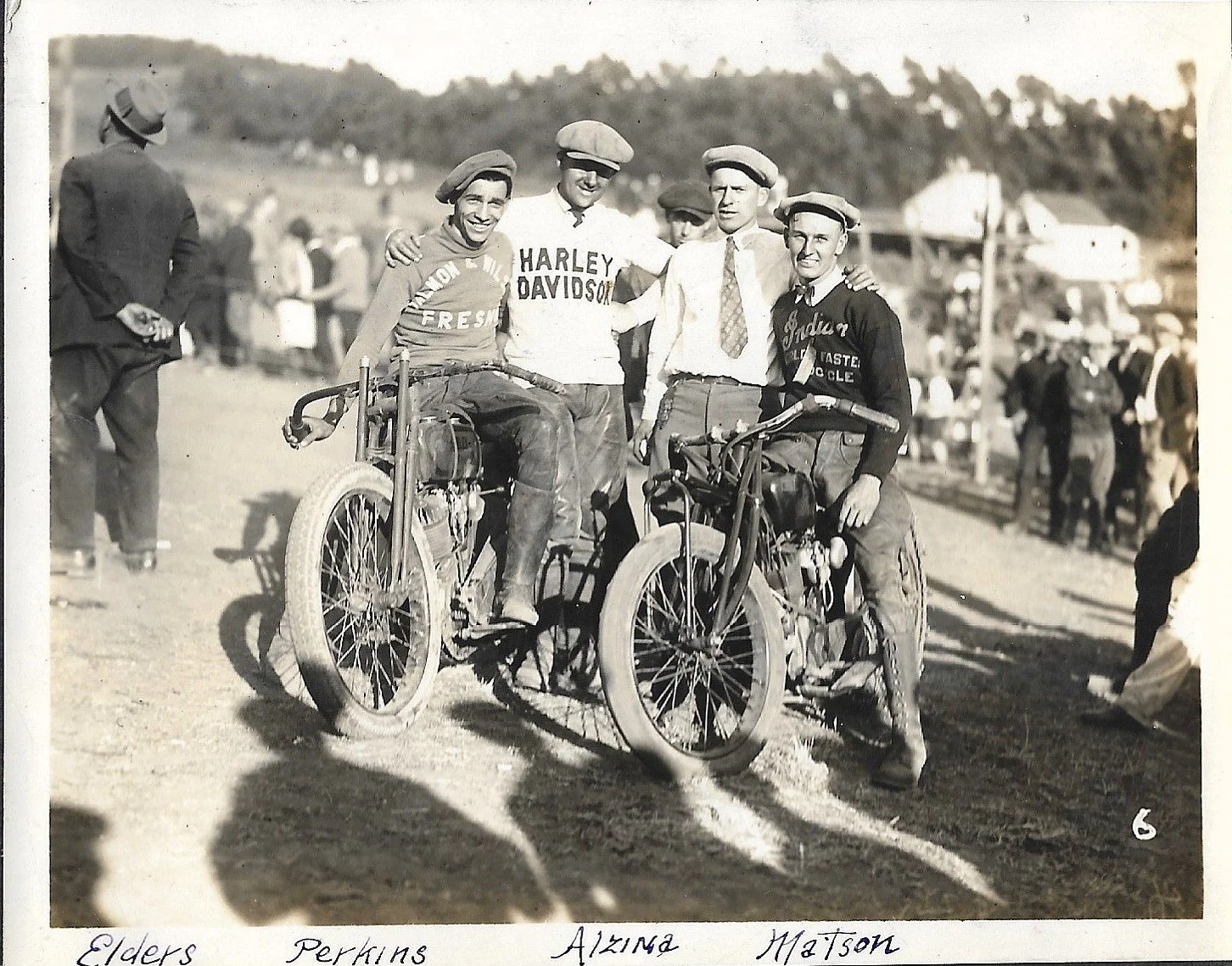
“Sprouts” Elders (from left), Dudley Perkins, Alzina and “Swede” Matson pose at a hill climb competition. Matson’s sweater boasts that Indians are the “World’s Fastest Motorcycle.” Photo courtesy the Caya Family, El Cerrito Historical Society collection
Famous and not-so-famous names
Dudley Perkins of San Francisco began racing Harley-Davidsons in 1916 and was known as the “Daddy of the Hill Climb.” He held the record for the El Cerrito event, as well as many other famous hills in the Western States, holding the western championship for 10 years.
Perkins founded his Harley dealership in San Francisco in 1914 and it was the oldest family-owned dealership until it was sold in 2018. The business closed in 2024. Perkins, known around as “Dud,” was a member of the American Motorcyclist Association’s Hall of Fame.
Another early competitor on the hill climb circuit was Loren “Hap” Jones, perhaps best known for the motorcycle accessory company he founded. He also owned several motorcycle dealerships, as well as a bicycle rental business near Golden Gate Park in 1933.
In addition to the aforementioned Soapy Sudmeier, another popular rider was “Sprouts” Elders, who was sponsored by an Indian motorcycle dealer in Fresno. Others included Finnegan Spear, “Swede” Matson, George Faulders, Les Van Demark, Pete Andresen and Red Mikelson.
The 1925 competition drew two international entries, William Leighton of Sydney, Australia, and Emmet Falls from Constantinople, “bringing with him three of the products of the best engineering brains in Turkey,” according to the Sept. 30, 1925 edition of the Oakland Tribune.
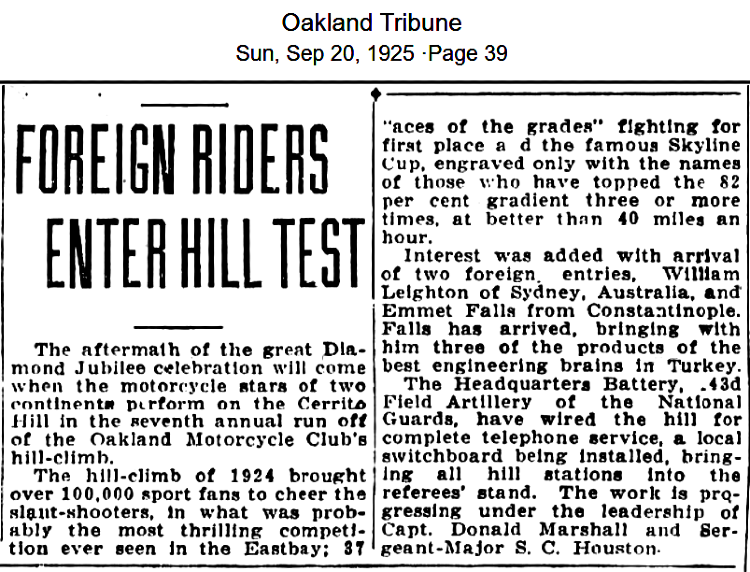
Article courtesy of Roxy Article Miraválle
Two wheels good, four wheels bad
A less successful hill-climber was a car sponsored by George Corey, who owned a local garage specializing in the repair of Ford cars and trucks. In a number of photos of the competitions, Corey’s business was spelled out in white chalk alongside the track. But when his crew attempted to climb the course in a car, “The machine was able to travel only a very few feet as it was a very rugged hill,” according to Belfils.
Whatever the result, the spectators got their money’s worth as no admission fee was charged.

Earl Corey's crew found it tough going trying to drive a car up Motorcycle Hill and soon gave up the chase. El Cerrito Historical Society collection
“If one likes plenty of action and thrills for his Sunday outing, the place to go today is the motorcycle hill climb which is being staged by the Oakland Motorcycle Club and the El Cerrito volunteer fire department on Peralta Hill in El Cerrito,” according to the Sept. 30, 1928 Oakland Tribune. “At the climb Sunday, the championship of the United States will be decided, as Orrie Steele of Paterson, N.J., who holds the eastern championship, is to ride. Steele has won practically every contest in the Atlantic and Middle Western State this year and has come west to attempt to take the western championship from Dud Perkins of San Francisco.”
Perkins triumphed, earning the national champion title.
Editor’s note: After the El Cerrito Historical Society posted a photo of a competition at Motorcycle Hill on social media, former El Cerrito resident Tom Caya contacted us and offered to share more than three dozen photos of races at the hill saved by his grandather. Tom explained “Papa (James Wilfred Caya) was a member of the Oakland Motorcycle Club from 1920-29 and very active in the club. He was the president in 1925. At some point during those years, he met my grandmother. He was raised in Berkeley and my family lived in El Cerrito from 1964-77.” Here are some of the action shots provided by the Caya family.